Hello everyone,
And welcome to The Bosa Bosa Review 2014. We have prepared lots of posts in 2013 as well, they are still baking under Drafts. It has been a good year, with many lessons and a couple of awesome accomplishments as well. We are full of new energy to bring on the best of the arts scene in Japan.
Stay tuned!
The Bosa Bosa Review
Tuesday 4 February 2014


Wednesday 26 December 2012
Happy New 2013 kids
To all beauty in the world expressing itself in ways we feel close to, and to all those going through the school of hard knocks, may 2013 bring you only the best ! Happy Holidays ~
.JPG)
.JPG)
.JPG)
.JPG)
© A great kid
Saturday 15 September 2012
Michelangelo Antonioni Eclipse (1962)
Film Review (in French) : L'ECLISSE
(French title, L'Eclipse, English title, Eclipse )
a film directed by Michelangelo Antonioni, with Monica Vitti and Alain Delon (1962)
part of a trilogy (L'Avventura 1960, La Notte 1961)
Note :
This review combines original text with Philippe Lubac’s analysis of L’Eclipse, available on Objectif Cinema : http://www.objectif-cinema.com/analyses/184.php
Film Review Copyright © 2012 The Bosa Bosa Review
- Some Rights Reserved -
__________________________________________________________________
L’Eclipse – la chronique d’un amour qui n’aura pas lieu
Analyse du film
de Michelangelo Antonioni
Michelangelo Antonioni L'eclisse (1962)
original language: Italian, subtitles in French
uploaded on youtube by 4everVitti on 30 August 2012 here
Un amour innomé, qui ne porte même le nom
« amour », révélé à un monde sans repères. L’histoire d’un moment,
l’allégorie d’un jeu d’hombres et de leur amour avec la lumière, qui ne s’est
pas levé au rang du mythe cosmologique par la pudeur du réalisateur, mais qui
se relève quand même comme une métaphore -mythe déroulée à l’envers, se dirigeant d’un moment quelconque vers une genèse,
comme il y a pas mal de légendes sur la naissance du monde provoqué par la
séparation du soleil et de la lune.
Cependant le soi-disant mythe cosmologique
inversé qui fait l’objet de cette étude devient possible sans le renversement
de l’axe du temps. La métaphore d’une fin similaire au commencement, quand
l’espace est vide et les deux astres se superposent et donnent l’illusion d’une
seule entité, pose un étrange problème : ce qui nous effraye de plus, ce
que nous comprenons de mieux… L’illusion d’un espace qui se déchire en deux, le
jour et la nuit, dont la séparation donne naissance à la continuation, à la
échappement du chaos, le monde –même, ou bien l’illusion encore plus moderne
des deux astres, avec lesquels nos yeux et nos esprits se sont habitués jusqu'à
l’épuisement, astres qui se superposent soudain, par hasard, qui deviennent un
tout entier, tandis que le reste devient ténèbres, pareil au commencement du
chaos ?
Le mythique crée par ce scénario est soumis à
l’observation raffinée d’un être humain (Vittoria) qui est, constamment,
consciente de son propre existence et du fait qu’elle peut créer le mythe par
un simple regard, qui élargit son propre mythe sur ces espaces qui
s’harmonisent à elle, sans qu’elle se laisse absorbée par aucun néant, par
aucune différence.
Un monde différent lui devient un monde
impossible, étant, au même temps, le plus possible des tous.
Dès la première scène, on entend Mina,
chanteuse célèbre de son temps, chantant « Il twist », une chanson
gaie, présentée avec un plaisir et une exubérance folâtre. Mais cette musique
s’arrête brusquement pour être remplacée par une composition atonale et
dissonante de Giovanni Fusco. Le contraste entre les deux pièces est net et significatif.
Il indique une opposition qui marque tout le film, entre l’ordinaire et le
familier d’un côté, et entre l’étrange et le déroutant de l’autre côté. Les
harmonies traditionnelles et le rythme prévisible du twist représentent la
chose avec laquelle les gens sont habitués ; la musique populaire est
cette chose que le consommateur moyen aime.
Par contraste, la musique symphonique moderne est innovatrice et
bouleversante ; la dissonance exprime, en particulier, une sorte
d’aliénation et elle est confirmée comme inquietante par nature. A travers le
film, il existe un contraste fondamentale entre la perception du monde comme
quelque chose d’ordinaire et normal, d’un côté, et quelque chose de mystérieux
et étrange, de l’autre côté. Pour Vittoria, la nature étrangère des choses
devient de plus en plus visible. La musique atonale de Fusco, même si utilisée
au minimum, représente un moyen très puissant d’évoquer l’étrangeté récurrente
des choses.
La première image du film est une image des
gestes. La suivante aussi. Les cadres se succèdent et ils écrivent le film, en
composant, paradoxalement, une image statique. Il aurait pu être un décor de la
peinture flamande. Chaque moment du commencement de ce film nous apparaît comme
un zoom sur les détails de cette peinture imaginaire. Chaque fois, l’interprète
« pose » avec ces détails, avec les objets que l’artiste désire les
mettre en valeur. Mais encore plus visible que les objets -mêmes, c’est son
contact « direct » avec les objets. Le regard fixé sur un objet, la
caresse d’un objet, un attouchement beaucoup plus complexe en
significations ; Vittoria est, dans ce moment, la personne qui met un
terme à une relation, la personne qui ne sent plus rien.
Les individus, en ce début du film, sont pris
dans un monde d’objets. Dans cette scène de séparation, un monde de choses
entoure Vittoria et Riccardo, et les « imprègne », à l’image de la présence à
peine perceptible, mais persistante et lancinante du ventilateur. Suite à cette
scène, sur le chemin du retour de Vittoria chez elle, le monde moderne des
objets et le monde naturel se confondent dans les différents cadrages des plans
de la scène… Mais progressivement, au cours du film, le monde des objets va
paraître, de plus en plus, prendre le pas sur le monde naturel, devenir nouveau
et étrange.
Ce n’est pas un film sur le tout entier, sur
l’intégral, sur une héroïne parfaitement définie, sur une fin qui complète le
reste et lui met un point final.
C’est un film sur les détails, sur les
fragments de personnalité, sur une fin indécise, inexpliquée, sur laquelle le
spectateur va donner son verdict, même si on lui est évident que Antonioni a construit
cette fin comme l’alternative unique. Mais le détail est essentiel.
On peut le constater lorsque Vittoria se
retourne vers l’abat-jour et le ventilateur : l’amorce de la lampe prend la
moitié du cadre, et Riccardo est obligé de faire un mouvement pour que la
caméra recadre sur lui, accompagnant ainsi ce geste. Le cadre de départ est
composé à moitié par Vittoria, et à moitié par la lampe. Après le mouvement de
Riccardo, on a un cadre découpé en trois tiers égaux (Riccardo à gauche,
Vittoria au centre et l’abat-jour à droite). Riccardo doit littéralement se
faire une place dans le cadre car la caméra, comme Vittoria, semble plus
attentive au cendrier cassé ou à l’abat-jour qu’à celui-ci.
Plus tard dans le film, lorsque Vittoria et
Piero se retrouvent au carrefour, Vittoria continue de s’intéresser autant à
son entourage matériel, au bâton qui flotte sur l’eau, qu’à la présence de
Piero, comme elle s’intéressait précédemment aux bibelots chez Riccardo. Mais,
cette fois-ci, contrairement à Riccardo, Piero aussi est pris par ce monde des
objets. Il lui parle de sa nouvelle voiture. Ian Lockerbie, dans « La
difficulté d’être », dans L’homme et l’objet, va même jusqu'à affirmer que
le personnage de Piero tient lieu d’objet. « […] Piero, le jeune agent de
change, frénétique, qui ne vit que pour le moment présent. C’est comme si Antonioni
était poussé par un besoin profond de confronter une humanité qui est toute «
en surface », car manifestement la grande, sinon la seule qualité de Piero,
c’est d’être là. »
Atteindre un objet d’art avec des mains qui
disent le tout, pareil à Rodin, c’est l’un des premiers indices. Il y a des
nombreuses images -paire, les premières dans la scène où Vittoria se sépare de
Ricardo et les secondes dans celle où elle se sépare de Piero. Ces images ont
en commun quelque chose de l’ordre du pictural, la ressemblance y est évidente,
mais elles définissent essentiellement la différence des situations et
« le changement ». Et
pourtant, la fin incertaine du film nous fait penser que la ressemblance a été
plus forte qu’on le croyait. Cette fin nous aide à comprendre, par association
d’images, que le changement a été un événement nécessaire mais pas définitoire.
A la scène de Vittoria introvertie, blottie comme un enfant dans un fauteuil,
on fera un renvoi plus tard, dans la scène de la veille de la séparation
« présumée » de Piero, quand les deux amants « se
réjouissent » sur un canapé, la où la solitude ne paraît plus avoir de
place. Toutefois, la nécessité de la solitude est une entité invisible qui
prend sa place.
Auprès du jeu des gestes, apparaît le jeu des
respirations, également dramatique. Dans la scène de la séparation de Riccardo,
le seul à respirer reste le ventilateur.
Dès la première scène de L’éclipse –
la séparation de Vittoria et Riccardo-, se détache peu à peu, sans que l’on y
prenne garde, un élément à priori anodin : le ventilateur de la pièce. De
manière cyclique, il apparaît et réapparaît dans le champ. Dans les différents
cadrages, les courants d’air qu’il fait circuler prennent dans l'espace
scénique toutes les directions de flux possibles. Même un spectateur attentif a
bien du mal à localiser la source de ces flux. En fait, sans que l'on y prenne
garde, ce ventilateur devient l'élément prégnant de la scène.
Le personnage principal est captif dans un
espace qui l’étouffe, qui essaie le délimiter. On lui manque la lumière
naturelle. Vittoria va tirer les draperies en tuant la lumière artificielle et
relâchant la tension du moment. Le geste de prendre un objet et le briser en
mille morceaux n’appartient à ce type de personnage. Son drame est la lutte
avec le cadre de son propre tableau ; nulle caractérisation ne lui va pas.
Les revues « Il Contemporaneo »
font allusion au monde moderne ou aux gens d’un monde moderne, mais l’idée de
modernisme est traitée, dans ce film, d’un point de vue très subjectif. Vittoria est un personnage moderne. Elle
disparaît devant le chevalet avant que son portrait soit fini. Les hypostases
dans lesquelles elle est surprise ne sont que des éventuelles esquisses. Elle
connaît bien qu’aucune fin ne pourra découvrir son tout entier, en conséquence
tout ce qu’il lui reste est de s’enfuir.
Dès les premiers instants de la séquence où
Vittoria rentre à pieds chez elle de chez Riccardo, avec le surcadrage du haut
de portail enserrant un paysage constitué de quelques arbres, on peut supposer
que, dans la compétition entre la nature et le monde moderne des objets, c’est
ce dernier qui a tendance à l’emporter. La nature est délimitée dans
l’intérieur d’un cadre bien précis (ce haut de portail). Puis, dans le trajet
qu’accomplit Vittoria jusqu’à son domicile, à l’image de cette sorte de château
d’eau en forme de champignon, entouré de quelques grands arbres qui paraissent
bien seuls sur ce bord de parking, ces deux mondes ne cessent de cohabiter dans
le cadre. Dans chacun des plans de cette séquence, on retrouve à la fois l’idée
du naturel, du touffu, du désordonné qui se balance au gré du vent comme ces
herbes folles, et l’idée de l’ordonné, du dessiné par la main de l’homme, qu’il
soit courbe comme les trottoirs ou rectiligne comme les lampadaires.
Lorsque Vittoria et Riccardo arrivent au pied
de l’immeuble de celle-ci, la nature n’occupe plus que les bords de cadre (une
amorce de tronc d’arbre à gauche, une plante à droite). Sous l’immeuble, la
nature a entièrement disparu. Nous n’avons plus que des lignes verticales ou
horizontales, et des carreaux. L’objet, le château d’eau - champignon du
parking, dont la forme se retrouve dans la lampe -champignon du salon de
Vittoria, a gagné. Les feuillages bruissant dans le vent nocturne que regarde
Vittoria n’ont presque plus de place dans l'image. De même, lors de la minute
de silence à la bourse, on retrouve cette idée qu’il y aurait bien un monde des
objets, un monde indépendant du monde naturel. Les hommes font le silence, mais
les téléphones continuent leur ballet de sonneries. On peut aussi voir, dans ce
moment là, ce qui se reproduira à plus grande échelle, à la fin du film, lors
de l’éclipse : la nature se calme, se tait et, l’espace de quelques instants,
laisse la place au monde inanimé qui l’entoure.
A propos de cette séquence à la bourse, il semble intéressant de noter ici des effets de symétrie qui serait au film lui-même ce que l’ordonnancement, la maîtrise, la main de l’homme sont à un milieu naturel. Lors de la minute de silence à la bourse, dans le champ contre champ du premier dialogue de Piero avec Vittoria, se produit un effet de « symétrisation » par rapport à un objet : une colonne de pierre. A la masse blanche des cheveux de Vittoria répond la masse noire du corps courbé de Piero. A l’inclinaison vers la droite de la tête de Vittoria répond la même vers la gauche de Piero. Cette idée d’ordre se poursuit dans le plan suivant où Piero et Vittoria se redressent de derrière cette colonne avec un même élan. La colonne imposant sa masse au milieu du cadre, et le découpant en trois tiers égaux.
A propos de cette séquence à la bourse, il semble intéressant de noter ici des effets de symétrie qui serait au film lui-même ce que l’ordonnancement, la maîtrise, la main de l’homme sont à un milieu naturel. Lors de la minute de silence à la bourse, dans le champ contre champ du premier dialogue de Piero avec Vittoria, se produit un effet de « symétrisation » par rapport à un objet : une colonne de pierre. A la masse blanche des cheveux de Vittoria répond la masse noire du corps courbé de Piero. A l’inclinaison vers la droite de la tête de Vittoria répond la même vers la gauche de Piero. Cette idée d’ordre se poursuit dans le plan suivant où Piero et Vittoria se redressent de derrière cette colonne avec un même élan. La colonne imposant sa masse au milieu du cadre, et le découpant en trois tiers égaux.
Lors de la scène de séparation de Vittoria et
Riccardo, ce même processus de « symétrisation » se construit avec
les deux plans de Vittoria regardant Riccardo, assis devant elle, et de son
contre-champ, où les protagonistes se tiennent face à face. Ces plans sont
symétriquement opposés et s’articulent, comme dans la scène de la bourse,
autour d’un objet - pivot. Ici, c'est un abat-jour. On a un plan sur le personnage
de Riccardo, peu dense, avec une échappée sombre sur la partie gauche du cadre,
contenant l’amorce quasi blanche de la chevelure de Vittoria, de dos, au milieu
en bas du cadre, ainsi que l’amorce de l’abat-jour en haut à droite du cadre.
L'abat-jour est l’unique élément que l’on retrouve dans son plan symétrique sur
Vittoria. Pour reprendre cette idée de nature asservie à l’homme, ne
pourrait-on pas dire que, à l'image de cette série de plans, nombre de plans du
film sont ordonnancés comme des jardins à la française ?
Sur ce même principe de « symétrisation », les deux séquences du flirt de Piero et Vittoria, dans la demeure familiale de celui-ci puis à son bureau, se répondent par rapport à un point central qui serait la séquence où ces deux mêmes personnages se retrouvent allongés dans l’herbe, à l’ombre d’un arbre. La première scène est sombre, la seconde est claire. Les personnages s’embrassent d'abord sur un lit, puis sur un canapé. Ils s’embrassent à travers une vitre en fer, puis à travers une baie vitrée. Dans la première demeure, les plans -bustes de Vittoria répondent aux bustes des statues antiques, la robe déchirée ressemble à la toge romaine de statues. Ou encore, à la première femme inconnue encadrée dans une fenêtre répond le plan similaire de Vittoria dans cette même position.
Sur ce même principe de « symétrisation », les deux séquences du flirt de Piero et Vittoria, dans la demeure familiale de celui-ci puis à son bureau, se répondent par rapport à un point central qui serait la séquence où ces deux mêmes personnages se retrouvent allongés dans l’herbe, à l’ombre d’un arbre. La première scène est sombre, la seconde est claire. Les personnages s’embrassent d'abord sur un lit, puis sur un canapé. Ils s’embrassent à travers une vitre en fer, puis à travers une baie vitrée. Dans la première demeure, les plans -bustes de Vittoria répondent aux bustes des statues antiques, la robe déchirée ressemble à la toge romaine de statues. Ou encore, à la première femme inconnue encadrée dans une fenêtre répond le plan similaire de Vittoria dans cette même position.
Ceci nous amène à un nouveau thème du film,
celui de la femme dans le cadre, de la «femme portraitisée ». Lorsque Vittoria
rentre chez elle et allume son appartement, ce même cadrage, différentes fenêtres
d'appartements voisins s'allument. Différents carrés lumineux naissent. Comme
les sonneries de téléphones, lors de la minute de silence à la bourse, ces
carrés ont une sorte de vie propre : ils s’allument et se multiplient. De plus,
on peut constater que ce sont, à chaque fois, des femmes qui évoluent dans ces
carrés, qu’elle soit vivante (Vittoria) ou simple image (la mise en abîme du
surcadrage qui dévoile, comme une sorte d’icône, le poster d’une femme
regardant elle-même à la fenêtre). Ceci se renouvelle quelques minutes plus
tard, lorsque la voisine, filmée dans le cadre de sa fenêtre, regarde Vittoria
et son amie, filmées aussi dans le cadre d’une fenêtre, ou encore lorsque nous
est donné à voir sur un mur ce cadre de photo -poster d’une femme africaine.
L’idée qui semble pouvoir se dessiner ici est que la femme serait réduite à
l’état d’image, de figurine. Elle passerait dans le monde des choses. Notons
que dans l'appartement de Piero comme dans celui de Victoria il y a cette mise
en abîme d'une femme regardant le tableau d'une femme.
Au départ de Vittoria, les rues sont désertes
– l’une des analogies avec le désert spirituel du personnage. On pourrait le considérer
un procédée simpliste d’exprimer l’état d’esprit du personnage, si on ne
remarquait le fait que l’image se répète périodiquement, chaque désunion de
Vittoria effaçant, à la nature, toute trace de dynamisme.
Les objets d’art ou les objets artistiques,
ceux définis par l’esthétisme de l’image, complètent Vittoria, en révélant
subtilement ces fragments d’émotions qu’elle dissimule sous la masque de sa
propre modernité. Le tableau accroché sur le mur, représentant une femme le dos
tourné et le visage contre un espace étendu « à la » Caspar David
Friedrich, confondu avec un possible espace extérieur de la chambre, cette
image d’une femme qui connaît la douloureuse décision de partir et qui ose
chercher des nouvelles horizons, remplace une éventuelle séquence avec
Vittoria.
« La fossilisation » ou le ego passé,
le passé démoli, développe l’idée de connaissance de soi. Vittoria ne passe pas
d’un état à l’autre sans savoir qu’est-ce qu’on lui arrive. Au moins
instinctive, elle se protége du péril de s’égarer dans le monde d’un homme.
Parfois, l’homme lui devient semblable à un objet, « mort »
intérieurement.
La scène de la danse africaine introduit l’idée
de l’animalier présent dans la nature, mais pas toujours visible à l’oeil
libre. Même s’il n’y a aucun personnage qu’on puisse appeler animalier, chacun
a des moments à réaction condamnable. Pour un personnage comme Vittoria, qui
évite être dévorée par un monde incompréhensible, soit qu’il est le monde des
objets qui remplace peu a peu le monde des hommes, soit qu’il est le monde des
hommes qui se délaissent dans leur propre existence sans se poser des
questions, le reste est par définition inhumain.
Par la scène du vol à Vérone, l’insignifiant
du monde que nous vivons est mis en évidence, sans être analysé. On met l’accent sur l’espace sans règles et
systèmes des hauteurs, des nuages de rêve. Il y en a d’autres à qui cette
hauteur leur crée le vertige, car ils doivent se trouver, en permanence, les
pieds par terre pour se sentir à l’aise.
L’atterrissage de l’avion a lieu sur la ligne
droite et longue de la piste, l’une des géométries de l’espace, avec laquelle
le réalisateur jongle pour exprimer les étapes du destin du personnage. La géométrie
apparaît comme une autre forme d’art ; une grammatique du temps ; un
passage que Vittoria et Piero traverse ; ce sont des points de suspension
– tout comme l’éclipse du point final, des lignes parallèles qui t’invite à
passer, mais totalement dépourvues de continuité. La peau de zèbre de la
chambre africaine pousse au premier plan, non seulement la même disposition des
lignes qui ne se rencontre jamais, mais aussi l’idée que ces lignes et cette
peau appartiennent à un autre endroit, appartiennent à la vie et à la liberté.
Mais si la piste est une ligne droite, si
l’espace est divisé en deux par une barre horizontale au moment de son départ
de la maison de Riccardo, si le pavement de son bloc représente des carreaux
d’échec, si on trouve des barreaux et des lignes verticales à l’entrée de la
Bourse et le motif du labyrinthe grec au dessus de cette même entrée, à Vérone
on observe les lignes courbes, les arches, les cercles des ombrelles, les
lignes libérées de la monotonie droite ou sinueuse.
Des lignes libres, qui définissent un état
d’esprit par l’élan des rondeurs.
Touchant exemple d’un état d’esprit : La
réaction du vieillard qui a perdu 50 millions livres à la Bourse – les fleurs
dessinées sur une petite serviette - introduit pour quelques moments,
seulement, un autre personnage, différant de tous les autres, qui n’agit pas
alors que l’action ou le cri aurait été considérés naturelles et normales. Si
nous trouvons le monde labyrinthique de la Bourse extrêmement drôle, nous, qui
ne comprenons pas pourquoi tant de bruit pour rien, ce personnage parait être
le seul de l’intérieur qui n’a pas perdu son sens de l’humour.
La monotonie que Vittoria et Piero n’auraient
jamais acceptée, apparaît toute claire dans l’image du couple de vieillards
assis sur une terrasse où joue un pianiste, et vient comme une explication au
silence des deux amants au moment de leur séparation.
Il y a des choses desquelles ils s’enfuient
tous les deux, il y a une réalité qui n’est pas encore la leur, mais que l’incompatibilité
fondamentale de leur personnalité aurait pu la créer.
Les filmages de la scène du rendez-vous entre
Vittoria et Piero, au carrefour, sont comme des petits films muets, chaque
image étant comme un mot clef qui attend son épithète, ses attributs, son
explication poétique. Le passage sur lequel on traverse ou qui ne se voit pas,
la rue qui ne se change pas, la maison en cours de construction, qu’on ne réussira
jamais la voir bâtie, le baril à l’eau sur laquelle Vittoria laisse flotter un
petit bâton en bois, des images reprises et complétés dans la scène du
rendez-vous suivant, le cheval symbole de la mort, le landau qui passe au sens
contraire comme une opposition…
Au second rendez-vous de Vittoria et Pietro
sur la rue des symboles, le cadre est invariable, il n’y a aucune
transformation, la ville parait avoir mourut à ce carrefour, et les deux
amoureux paraissent indécis de le traverser. En permanence, il y a le
pressentiment d’une séparation des chemins.
Leur rencontre et leur aventure se résument
au croisement des chemins différents qui se confondent pour un moment, et qui
correspond à un certain passage, à une maison en cours de construction.
Le moment où le passage sera traversé par
d’autres gens, où la maison sera bâtie et méconnaissable, ce moment
n’appartiendra plus aux deux amants et ils n’appartiendront à ce coin de
monde. Le geste de Vittoria de toucher
le petit bâton qui flottait dans le baril à l’eau et de le mouvoir de la même
manière qu’elle bouge le statique de son âme, est accompagné par le geste de Piero
de joindre le bâton flottant avec sa propre allumette. La flamme, pas seulement
nécessaire du point de vue de Vittoria, mais aussi possible par rapport à leur
histoire d’amour, est noyée dès le début dans une eau abondante. C’est toute
une histoire en train de se développer. Mais en dépit de tout ça, l’histoire
traîne après elle la fin.
Arrivée à la maison de Piero, Vittoria
devient le témoin d’un monde qui ne lui correspond point. Le monde de Piero lui
parait unidimensionnelle, c’est une dimension avec laquelle elle ne peut pas
s’identifier, mais qu’elle accepte au nom de la liberté offerte par le bonheur près
d’un homme.
Dans l’appartement de Piero, Vittoria est un
personnage « en visite ». Elle paraît à la fois lointaine et très proche de la
situation. C’est cette même idée que l’on retrouve lorsque, en cherchant le
petit chien de sa voisine, Vittoria tombe par hasard sur ces poteaux qui se
balancent légèrement dans la nuit. On est à l’un des moments les plus marquants
du film. Pourquoi ? N’y aurait-il pas ici un changement de régime ? Tout
d’abord, au niveau du scénario, il y a une brisure puisque cette « rencontre »
avec les poteaux n’apporte rien à la recherche du petit chien. Mais aussi parce
que la caméra regarde avec intensité quelque chose d’absolument anodin et qui,
par le fait même qu’il soit regardé avec insistance, devient étrange et
inconnu. L’intensité du regard entraîne la redécouverte du monde. Ces poteaux
dans la nuit sont bien plus provocateurs et lointains que toutes les photos de
ce pays lointain qu’est le Kenya. Peut être que les photos de l’album de la
voisine ne s’intéressent pas réellement à ce pays d’Afrique, et n’en retirent
que ce qu’on attend d’elles : des clichés.
Au sens photographique comme au sens commun.
Alors que les yeux de Vittoria – ou la caméra d’Antonioni- nous montre avec
acuité des poteaux qui se balancent dans la nuit, avec ce que cela comporte
d’incongru et, surtout, de prégnant. Comme le montre Gilles Deleuze, dans « Au
delà de l’image -mouvement » de L’image - Temps, on passe d’une situation
sensori-motrice (on a perdu le petit chien dans le quartier, donc on cherche le
petit chien dans ce quartier) à une situation purement optique ou sonore (cette
vision des poteaux). On retrouve cette idée quelques instants plus tard,
lorsque Vittoria regarde l’aile de l’avion qui décolle. Les lignes droites et
les formes trapézoïdales qui composent le plan nous donnent à voir une image
qui tend vers le dessin abstrait. Ce que Gilles Deleuze appelle un espace
quelconque, « déconnecté », «vidé ».
Vittoria affirme que deux êtres n’ont pas
besoin de se connaître pour s’aimer, énonçant ainsi son droit à autodéfense, son
désir de vivre jusqu’au bout une illusion sublime, évitant un échec possible
provoqué par la connaissance. La connaissance de soi ne représente un problème
pour elle, même si ses réponses, assez confuses, pourront l’accuser d’être une
personne faible. Au contraire, son personnage est extrêmement fort, et elle
sait que si elle s’exprime soi-même face à quelqu’un, elle peut tout ruiner,
car il y auront des possibles déceptions et incompatibilités des deux côtés. La
scène du baiser par la vitre est une combinaison de jeu et façon de jouer avec
les symboles. C’est en même temps un paravent entre deux mondes qui se
regardent mutuellement sans se reconnaître, mais qui savent faire abstraction
de cet paravent et qui se laissent en proie à un jeu enfantin et sérieux,
probablement même plus beau que celui des gens qui vivent aux mondes faciles et
sans paravents.
L’attouchement des mains des deux, comme
prélude, comme premier signe de reconnaissance du désir commun, nous ramène à
Rodin et à l’une des premières scènes dans laquelle l’image entière se focalise
sur la main sculpturale de Vittoria, sur Vittoria comme œuvre d’art.
Le sentiment de l’étranger exprimé par Piero,
au sens propre du mot « il me parait que je me trouve à l’étranger »
est repris par Vittoria au sens figuré, car il lui est complètement étranger,
il est un « mon désert » à la Saint-Exupéry. La proposition de
mariage déclenche en elle un « je ne sais pas » qui rend fou
n’importe quel homme. La psychologie de l’homme avait été utilisé comme
procédée d’antithèse et avait introduit la note humoristique dans la première
partie du film. Riccardo avait demandé des explications « depuis quand tu
ne m’aimes plus… il y a un motif » et la réponse avait été la même :
« Je ne sais pas ».
La dernière scène dans laquelle apparaissent
Vittoria et Piero s’achève avec un embrassement affectueux, leur étreinte ou l’embrassement
du silence. La promesse d’une nouvelle rencontre est, en fait, la promesse
dissimulée de la finalité, le serment de chacun qu’il ne reviendra plus. Le
« et demain, et après-demain » devient le « jamais »
tacite.
Vittoria part en descendant les marches d’un
escalier en colimaçon qui se roule sur les charpentes de réparation du lift,
image qui rappelle un vieux clocher, tour difficile à gravir, labyrinthe d’échafaudages,
mystérieux et dangereux, que seulement ceux qui défient le vertige peuvent
l’affronter, pour la beauté des panoramas admirés du haut. L’escalier en
colimaçon peut être un simple escalier, ou peut être une géométrie étudiée,
c’est le seul moment quand Antonioni la choisit, motif pour lequel j’ose la considérer
aussi chargée de symboles que le reste des lignes géométriques dont on a parlé.
Dans la signification symbolique de la
spirale on trouve : « le signe de l’équilibre dans le déséquilibre,
de l’ordre de l’être au sein du changement… » (Jean Chevalier, Alain
Gheerbrandt, Dictionnaire des symboles, Paris 1974, p. 240).
Il est évident que le personnage Vittoria se
trouve en pleine transformation, qu’il est soumis à une dynamique lente du
changement, sur la voie d’un nouveau commencement. Pour s’habituer à l’idée de
la séparation, elle a besoin d’une descente lente, prolongée, épuisante comme
une ascension. La séparation n’apparaît évidente, elle n’est pas brusque, en
conséquence ce chemin final ne peut pas être abrupt, mais continu vers
l’infini, n’impliquant la gravité d’une chute pareil au lift, où la
discontinuité d’un escalier normale, segmentée par rapport au nombre des
étages, donc dénombrable. Le numéro ou la notion de temps ont perdu leurs
coordonnées dans cet espace. Dans la maison de Piero, les téléphones sonnent
comme signe de retrouvaille de l’ordre, de retour aux vieilles habitudes ;
le vent bouge les papiers contre les murs ; le vent remplace le
ventilateur de la première scène du film, étant le seul souffle de ce cadre. Au
même moment, Vittoria s’arrête devant un magasin fermé à barreaux diagonaux,
symbole possible de la liberté captive dans une cage, moment où le personnage
se heurte des barreaux de sa propre vie- dernière image de Vittoria, séquence
que la fin du film nous permet l’interpréter comme le moment de son libération
d’une autre période existentielle.
L’état d’esprit dans lequel se trouve
Vittoria est identique ou semblable a celui décrit par Heidegger comme
« angst », traduit en général comme « anxiété » ou
« frayeur ».
Il y a un moment du film où apparaît
l’ambiguïté du « angst » et de la frayeur, qui pourrait être fondé
sur les définitions de Heidegger. A l’aérodrome de Vérone, Vittoria regarde les
traînées laissées par les bombardiers de U.S. Air Force. Les traînées
apparaissent encore une fois dans la scène finale du film, dans les titres d’un
journal, « L’Age Atomique » et « La Paix est fragile ».
Sans se déplacer dans le centre de l’histoire ou de l’attention du spectateur,
ces détails discrets évoquent la possibilité omniprésente d’un holocauste
nucléaire. Une telle catastrophe parait être un objet de frayeur plus fort que
« l’angst », décrit dans les termes de Heidegger. C’est un danger
identifiable qui existe dans le monde.
Au tout début du film, lorsque Vittoria
arrange des objets dans un cadre, apparaît un nouveau thème du film, la notion
de cadre, de ce qui est dans le cadre (le champ), et de ce qui est hors du
cadre (le hors -champ). Ce que révèle le doigt pointé de Vittoria lorsqu’elle
cherche à situer la position de la ferme sur la photo du paysage africain, est
qu’un choix de cadrage désigne autant ce qu’il montre que ce qu’il ne montre
pas. L’élection d’un champ entraîne nécessairement l’apparition d’un hors
-champ. Le non vu a autant d’importance que le vu car son absence, issu d’un
choix, permet au présent de se révéler. Par ailleurs, comme on le voit avec le
panoramique de recadrage qui nous fait passer d’un paysage de savane à des
lions se reposant dans l’herbe dans la même photo, le cinéma a une force
supplémentaire de révélation, dû à son mouvement, que n’a pas la photo où tout
ce qui est montré l’est en même temps, au même moment. La « pression du hors
-champ » fait que, au cinéma, l’image peut sans cesse avoir un devenir. On
retrouve cette idée du cadre et du hors -champ lorsque Riccardo vient, la nuit,
devant l’appartement de Vittoria. Lui essaye d’être « dans » le champ, en se
mettant dans le cadre de la fenêtre, elle essaye, au contraire, de rester hors
-champ, en ne passant pas devant cette même fenêtre.
Lorsque Vittoria arrive au carrefour de la
maison en construction pour attendre Piero, le plan en contre-plongée du
lampadaire décrit à la fois un objet connu –un lampadaire-, et un objet qui ne
l’est plus car il est « déspatialisé », déconnecté de l’endroit où il se
trouve. Par cette image, le hors -champ devient inconnu. Cette même
contre-plongée sur un tas de briques, au début du plan précédent, a pour effet
sur le spectateur que celui-ci a du mal à « raccorder » ce morceau d’espace à
la maison en construction. En fait, le raccord s’opère par déduction
intellectuelle car « tas de briques » et « maison en construction » font partie
du même paradigme. Il paraît cependant peu aisé de dire où se trouve le tas de briques
par rapport à la maison. A l’image du plan des barres horizontales et
verticales de l’échafaudage, qui ressemblent davantage à un tableau de Mondrian
qu’au plan d’une fiction scénarisée, les objets s’émancipent de leur
environnement. Ils ne valent plus pour la fiction. Ils ne valent que pour
eux-mêmes. Cette sortie du contexte se fait par deux moyens : la composition de
cadrages qui atteint l’Art Abstrait, ainsi qu’une vision de plus en plus
parcellaire. Le plan des palissades est très similaire au plan de l’aile
d’avion, tant par sa composition faite de lignes droites qui l’amène du côté de
l’Art Abstrait, que par le souffle du vent qui peut être la réminiscence du
bruit du moteur d’avion. Cela a pour effet de « re-contextualiser »
différemment l’objet filmé. Ce ne sont plus seulement des palissades.
Pour en revenir au plan de l’échafaudage, il en résulte qu’il est effectivement bien difficile de situer celui-ci dans la topographie du lieu. De même, les deux plans des femmes attendant l’arrivée du bus posent des problèmes de spatialisation : ces deux femmes pourraient être dans une rue quelconque. Le hors -champ ne se laisse plus appréhender avec facilité et on ne peut que faire des hypothèses sur la position de la bâtisse en construction (qui est, à ce carrefour, notre seul point de repère). Le spectateur se retrouve dans la même position que celle de Vittoria essayant de placer la ferme sur la photo du Kenya. Il spécule sur les différents possibles du hors -champ. Suivant cette même idée, il semble ardu, à la première vision, de saisir où s’arrête le bus. Les femmes qui l’attendent semblent elles-mêmes le chercher du regard.
Pour en revenir au plan de l’échafaudage, il en résulte qu’il est effectivement bien difficile de situer celui-ci dans la topographie du lieu. De même, les deux plans des femmes attendant l’arrivée du bus posent des problèmes de spatialisation : ces deux femmes pourraient être dans une rue quelconque. Le hors -champ ne se laisse plus appréhender avec facilité et on ne peut que faire des hypothèses sur la position de la bâtisse en construction (qui est, à ce carrefour, notre seul point de repère). Le spectateur se retrouve dans la même position que celle de Vittoria essayant de placer la ferme sur la photo du Kenya. Il spécule sur les différents possibles du hors -champ. Suivant cette même idée, il semble ardu, à la première vision, de saisir où s’arrête le bus. Les femmes qui l’attendent semblent elles-mêmes le chercher du regard.
Cette notion de perte de repère nous amène à
la dernière grande séquence du film qui en est, en quelque sorte, sa séquence
-matrice, celle vers laquelle tout le film tend - et peut-être d'où le film
vient - : la séquence de l’éclipse. Dans le panoramique qui inaugure cette
séquence finale, les éléments filmés retracent la chronologie du film. Tel la
madeleine de Proust, chaque objet rappelle, avec son entrée dans le champ, un
moment du film. Le vaste carrefour nu fait revenir le moment où Vittoria quitte
Piero après qu’il l’a embrassée pour la première fois. L’infirmière à la
poussette rappelle lorsque Piero et Vittoria se retrouvent, avant d’aller à la
demeure des parents de celui-ci. Le château d’eau -champignon évoque la
séparation de Vittoria et Riccardo. Le jet d’eau rappelle les jeux enfantins de
Vittoria et Piero. Les palissades de la maison en construction rappellent le moment
où Vittoria attend Piero au carrefour. Ce panoramique serait un concentré de
souvenirs du film. Les réminiscences du passé passe par les objets. Ils ont
ici, pour le spectateur, un rôle actif, ou plutôt moteur. Cette idée va se
développer sur la séquence. Le temps d’une éclipse, les vivants se taisent et
les objets se mettent à parler.
A l’image de ce tas de briques, où celles-ci sont maintenant cassées, on peut d’abord constater que du temps s’est écoulé, et qu’il a une emprise sur les objets. Les briques ont été usées par le temps. Telles des êtres vivants, elles ont vieilli. De même, la caméra scrute les craquelures du passage clouté, sur lequel marchaient précédemment Vittoria et Piero, telles les témoins de son évolution et de son « vieillissement ». A contrario, le vivant, que l’on peut caractériser par le mouvement, semble rester étrangement immuable : on a l’impression que c’est toujours le même Driver et son cheval qui trotte dans cette rue, alors que, on le sait depuis les chronophotographies de Edward Muybridge, s’il est bien une figure de l’image en mouvement c’est bel et bien celle d'un cheval au trot. Ou bien encore, il nous semble que l’infirmière ne cesse de promener son landau sur le même trottoir. Dans une sorte de mouvement inverse, le vivant se momifie, et les objets s’animent. C’est maintenant les feuillages des tilleuls qui s’agitent et s’animent. Les femmes qui attendent le bus sont silencieuses, par contre les roues du bus se mettent à crisser. L’eau qui coule du bidon, tel un animal le temps d’une éclipse, semble aller se cacher, se terrer dans les égouts. Et vice-versa, l’homme aux lunettes, dont un plan scrute le lobe inférieur de l’oreille en très gros plan, semble, lui, devenir un montage, un agrégat de différentes parties anatomiques. En quelque sorte, il est scientifiquement « objectivisé», et donc « objetisé ». Avec le très gros plan de parties du visage, celui-ci cesse d’être visage et vivant. Il devient un objet.
A l’image de ce tas de briques, où celles-ci sont maintenant cassées, on peut d’abord constater que du temps s’est écoulé, et qu’il a une emprise sur les objets. Les briques ont été usées par le temps. Telles des êtres vivants, elles ont vieilli. De même, la caméra scrute les craquelures du passage clouté, sur lequel marchaient précédemment Vittoria et Piero, telles les témoins de son évolution et de son « vieillissement ». A contrario, le vivant, que l’on peut caractériser par le mouvement, semble rester étrangement immuable : on a l’impression que c’est toujours le même Driver et son cheval qui trotte dans cette rue, alors que, on le sait depuis les chronophotographies de Edward Muybridge, s’il est bien une figure de l’image en mouvement c’est bel et bien celle d'un cheval au trot. Ou bien encore, il nous semble que l’infirmière ne cesse de promener son landau sur le même trottoir. Dans une sorte de mouvement inverse, le vivant se momifie, et les objets s’animent. C’est maintenant les feuillages des tilleuls qui s’agitent et s’animent. Les femmes qui attendent le bus sont silencieuses, par contre les roues du bus se mettent à crisser. L’eau qui coule du bidon, tel un animal le temps d’une éclipse, semble aller se cacher, se terrer dans les égouts. Et vice-versa, l’homme aux lunettes, dont un plan scrute le lobe inférieur de l’oreille en très gros plan, semble, lui, devenir un montage, un agrégat de différentes parties anatomiques. En quelque sorte, il est scientifiquement « objectivisé», et donc « objetisé ». Avec le très gros plan de parties du visage, celui-ci cesse d’être visage et vivant. Il devient un objet.
Se dégage de cette scène deux principes. Un
principe de liaison des espaces, par des mouvements panoramiques de caméra,
comme cela nous est donné dès le panoramique d’ouverture de la séquence. Et un
principe de « déliaison », qui fonctionnerait par une parcellisation de
l’espace, dû à des très gros plans, ou à des plans Inserts, où encore à des
plans décrivant le même objet par raccord dans l’axe. Avec ce dernier procédé,
nous n’aurions plus la continuité, la fluidité du mouvement panoramique de
caméra, mais, au contraire, un effet de saute, d’espaces disjoints.
Si l’on s’intéresse maintenant à ce que filme chaque mode, on s’aperçoit que le premier mode, que l’on pourrait qualifier de « continu », suit le mouvement – qui est l’apanage du vivant - (le cheval au trot, le piéton sur le passage clouté, l’homme qui lit son journal, les enfants qui jouent, les seconds passagers du bus qui rentrent chez eux) ; et le second mode, que l’on pourrait qualifier « de discontinu », scrute l’inanimé (un tas de briques, une barrière, des palissades, un échafaudage, le jet d’eau, les gouttelettes d’un feuillage, un balcon, un avion dans le ciel, un morceau de bois dans l’eau, etc.…). Ce qui semble intéressant, dans cette partition, dans ces deux modes de filmage – le continu et le discontinu - qui saisissent deux mondes se côtoyant – l’animé et l’inanimé -, sont, bien évidemment, de noter les exceptions.
Si l’on s’intéresse maintenant à ce que filme chaque mode, on s’aperçoit que le premier mode, que l’on pourrait qualifier de « continu », suit le mouvement – qui est l’apanage du vivant - (le cheval au trot, le piéton sur le passage clouté, l’homme qui lit son journal, les enfants qui jouent, les seconds passagers du bus qui rentrent chez eux) ; et le second mode, que l’on pourrait qualifier « de discontinu », scrute l’inanimé (un tas de briques, une barrière, des palissades, un échafaudage, le jet d’eau, les gouttelettes d’un feuillage, un balcon, un avion dans le ciel, un morceau de bois dans l’eau, etc.…). Ce qui semble intéressant, dans cette partition, dans ces deux modes de filmage – le continu et le discontinu - qui saisissent deux mondes se côtoyant – l’animé et l’inanimé -, sont, bien évidemment, de noter les exceptions.
De l’inanimé est filmé sur le mode du
continu, de la fluidité, et vice-versa. Le mouvement panoramique, qui suit
l’eau ruisselante jusqu’à l’égout, la rend « vivante ». De même pour le
panoramique qui décrit, en plongée, le carrefour, ou le mouvement
d’accompagnement qui suit la roue du bus. Les objets prennent vie. Alors que,
dans un mouvement inverse, les êtres vivants, filmés en mode discontinu, se
momifient. Le lobe de l’oreille de l’homme aux lunettes devient un objet
d’anatomie. L’homme, que la caméra suivait sur le passage clouté, se perd
derrière la barrière de bois, dans un cadre devenu immobile, au plan suivant.
Ni les femmes qui attendent le bus, ni leurs cadres, ni celle qui se tient
derrière des barreaux de fenêtre, n’osent plus bouger.
De plus, dans la fréquence des changements de modes, on peut noter que le mode continu du vivant est présent au début de la séquence, puis se raréfie au profit du mode discontinu. Il y a une contagion du continu par le discontinu. On passe du monde des vivants, au règne des objets. Enfin, au dernier plan du film, les objets ont gagné, puisqu’il nous est donné à voir au moment -titre du film –l’éclipse- non pas le soleil… mais un lampadaire. Celui qui s’est allumé, qui s’est animé justement parce que le soleil disparaissait. Le lampadaire devient le soleil. Le monde des objets a remplacé le monde naturel. Et, comme semble le suggérer la musique apocalyptique et l’incrustation du mot « Fine », le jour où les objets remplaceront les humains, ce sera la fin.
Les sept dernières minutes de l’Eclipse
consiste d’une série de prise de vue qui présentent l’endroit ou se
rencontraient et se promenaient les deux amoureux, mais sans les protagonistes,
cette fois-ci. On ne fait aucune mention ni à Vittoria, ni à Piero. Ce sont
maintenant les anonymes qui passent d’habitude par ce coin familier. L’autobus
s’arrête comme d’habitude et les gens y descendent.
Les dernières séquences présentent : les
arbres- symbole de la vie ; la rue - témoin de leurs deux
rencontres ; l’enfant dans le landau - symbole de la vie et du
commencement ; les pierres de construction de la maison en rénovation ou
en plein bâtiment - symbole du changement ou du commencement, une amélioration
planifiée mais encore en phase intermédiaire sinon déjà abandonnée, car les
travaux paraissent interrompus pour le moment ; le baril à l’eau ;
les piquets métalliques horizontales constituant l’ossature du bâtiment ;
le cheval – symbole de la mort ; le passage ; des gens
quelconques ; le vent -respiration de la nature au milieu de la nature.
L’eau coule sur le gravier, en respectant sa propre évolution cyclique, tout
comme le film qui nous se présent cyclique, commençant et terminant avec une
séparation.
L’eau coule du baril, un homme lit les titres
du journal : « L’Age Atomique » et « La paix est
fragile », les rues sont presque désertes, la nuit s’approche, le bâtiment
en cours de construction se lève dépeuplée, les nattes de paille de
l’échafaudage bouge au vent. Le film se termine avec un gros plan d’un
lampadaire blanc.
Jadis, dans un interview, Antonioni a suggéré
une interprétation de son puzzle de sept minutes : « La ville, le
monde matériel a dévoré les êtres humains. » En d’autres mots, le monde
des choses a accablé le monde des humains : la présence silencieuse des
objets a éclipsé les actions, les sentiments, les soucis et les aspirations des
humains. La condition de l’humanité moderne, aurait dit Antonioni, est l’une
dans laquelle les choses règnent en suprématie et les êtres humains sont, au
mieux, des annexes d’un monde essentiellement inanimé.
Dans la préface de son livre Six Films
(1964), Antonioni décrit comment a-t-il expérimenté une éclipse réelle qu’il a
souhaité inclure, ensuite, dans « L’Eclipse » :
« Je suis à Florence pour voir et filmer
une éclipse solaire. Un froid surprenant et intense. Le silence diffère de tous
autres silences. Lumière pâle, différente de tous autres lumières. Et puis, le
noir. Immobilité totale. Tout ce que je peux penser est qu’au moment d’une
éclipse, même les sentiments arrivent à s’arrêter - c’est une idée qui a une
liaison vague avec le film que je prépare – plus une sensation qu’une idée,
mais une sensation qui définit le film encore que le film est loin d’être
défini. Tout le travail et les filmages qui ont suivi, ont été toujours liés à
cette idée, ou sensation, ou prémonition. Je n’ai jamais été capable la mettre
à part. »
Fin
Tuesday 11 September 2012
Arts Council England employment programme for young creatives
Arts Council England is the place where I would choose to work, if I could...but I cannot do that yet, since due to budget cuts, there are no offers available, and most of their employees' contracts have a good chance to expire in 2013...
What I wish I had before turning 24 though is the chance to a genuine option - Arts Council England launches employment programme for young people, that is an opportunity for some of you out there to see your creativity flourish and not go to waste. Get paid for your work. Rarissimo, don't cha think?
I said PAID, oh let me say that again, PAIDDDDD....doesn't that sound wonderful?
Very proud, Arts Council England !
The Bosa Bosa Review editor-in-chief
What I wish I had before turning 24 though is the chance to a genuine option - Arts Council England launches employment programme for young people, that is an opportunity for some of you out there to see your creativity flourish and not go to waste. Get paid for your work. Rarissimo, don't cha think?
 |
Jerwood Charitable Foundation supporting the creative industries and you heard right, PAID internships |
I said PAID, oh let me say that again, PAIDDDDD....doesn't that sound wonderful?
Very proud, Arts Council England !
The Bosa Bosa Review editor-in-chief
Friday 27 July 2012
Glitch: Vintage and Digital Encounters
Vintage and
Digital Encounters: Saya Da Jung’s Usage of Online Objects and Glitch
Techniques
The Bosa Bosa Review ©2012 All right reserved.
introduction.
 |
| Artist Saya Da Jung (2012) |
She chooses digital media art to make
painting, while perfectly aware that digital art is a complex medium rather
unfit for the over-consciously commercial arts marketplace. The reason why she
is arresting painting in digital art is that she sees it not only as
transcription but as transmission, downloadable, shareable, mechanically
reproducible medium. She swoops up the molecular details of the image-editing
process. She uses the technique of glitch to bring lines and fissures across
the image, similar to paint raked with the squeegee over canvases by artists
like Jack Whitten and Gerhard Richter. She searches for accidents and
randomness beneath the surface of the digital image just as Max Ernst was
searching for natural materials and new textures to give life to his white
canvases when rubbed with the pencil. Saya Da Jung is interested in working
with vintage methods and modern techniques. Having graduated from the School of
the Art Institute of Chicago in Film, Video and New Media department (MFA
2010), the only school which uses vintage film editing equipment, optical
printing and jp printing machine, it is only
natural for her to wish to combine old and new, hand processing editing tools
for film and new media like glitch. Mixing everything, from glitch, texture of
surface, painting, lithography, creates the chaos which brings out to the
artist the inner order her art needs.
 |
|
©Saya Da Jung
|
 |
Saya Da Jung, MFA Graduation Installation, School of the Art Institute of Chicago, 2010 ©Saya Da Jung |
dolls and
glitch.
In her art, Saya Da Jung uses the non-invasive
technique of glitch to grasp the image of the body, an innocent, a-sexual
expression of the body in an over-sexualized culture. Both optically and
mechanically, the moiré
patterns created by the glitch technique of image-editing and the physical pull
in the electronic and digital act, make the glitch-images resemble “ultrasound-images”.
An ultrasound image is brought by a linear array transducer generating a 2D
image of received echoes and is usually associated with pregnancies. Using
sound waves so high they cannot be heard by the human ear, sonography allows
visualization and examination of the fetus without X-rays. The visual texture
of all glitch-images remind of such a process. Yet in Saya Da Jung’s case, the
choice for a glitch technique is not accidental. The visual in her case is
searching for a sound-content. Her “ultrasound” is exposing an inner scream.

The online Barbie dolls have recently become
the object of Saya Da Jung’s works. Just as with the equipment, the dolls she
started using, the Barbie dolls from the “I
wish x I have” series are vintage as well. “I wish x I have” reveals two sides: what is wished for as opposed
to what is possessed already, the “wish list” and the “have list”. The artist
wants her dolls old, vintage, used but not damaged. She searches for them online,
adds them to her “wish list”, even so, bear in mind that it is the list itself
that interests her, not the buy. She never really purchases them. This is not a
“I want to possess” type of Bellmerian fetish, it is the wish for an
impossibility.
The artist retains the image of the dolls on
her computer screen. They are there, in a space of their own, and also open to
the public eye, on e-Bay or someplace else, in a space called cyberspace, a
space empty of matter, a vacuum. They show their beauty, as well as the damages
inflicted on them by time. The artist watches them online and wishes she could
save them. She knows she cannot, therefore she starts altering them herself, by
manipulating the image digitally. This is the beginning of the redemption of
the self. The doll, never getting in the artist’s hands, either left online or
bought by another, is allowed change and freedom in the digitalized space of a
computer desktop. Becoming another, the doll somehow starts telling a story.
If you pay attention to the details, you will
notice that the screen of the online shopping web site is rather interesting,
for certain elements are common to all products and feel pretty much representative
of how objects (and artworks make no exception) are seen, as simple products thrown
on the market. Search for details, and you will notice that there is a “Time
left”, there is a “Price”, a “Best Offer”. Customers can choose to “Buy It Now”
or “Make Offer”. The item has a “Number” and belongs to a “Seller”.
When Saya Da Jung applies both old and new
techniques to manipulate the film, she withdraws it from a visible modern,
conscious reality back to an image of instincts and origins, an ultrasound
image. Her computer mouse is similar to the linear array transducer of received
echoes, used at medical check-ups. The lines raking the image from one digital
transformation to another are the visual representation of the echoes of chaos
itself, the sound of all beginnings, the beginning of existence, life,
experience, pain. Saya Da Jung uses this feeling of ultrasonic beam, flow,
tissue, motion of materials in her Untitled
video (2010) (1) where she transfers a two channel digital video installation
from 8 mm film to 16 mm film.
 |
Saya Da Jung, Cube Beyond Cube, 2011 © Saya Da Jung for original video artwork, click here |
I wish x I
have (2011) (2) is a film. When we take time to analyze this
film, we notice a doll’s head, legs, and something similar to typed Greek
alphabet letters, currency symbols, and numbers. These glyphs are not typed,
though. They are the unexpected result of the manipulation of files, which is
typical of the glitch editing process. If we look at other works she had made,
a couple of things become more obvious. Cubebeyond cube, who am I? Sound and Fury (2011) and Hurt My Heart (2011), reveal the same ultrasound rage. C-M Motors Body Shop (Hugging for Healing, 2010) is a video
not using glitch, yet still revealing an intense preoccupation with details, parts,
fragments of the body of the device. In this case it might be only a car and
its parts, yet for someone like Saya Da Jung stating that she is constantly
trying to understand the root of her impossibility to communicate with others,
the analysis of the inside parts should be interpreted as a physical search for
the roots of emotional distress. TheScale is Everything (2009) was a work focused on eating disorders, weights
and scales. There are numbers going all over the screen, defining existence
through data and physicality. Those numbers have been intentionally typed, yet
they look similar to the accidental glyphs resulted in the I wish x I have glitch. So looking back to I wish I have, we find the glyph-accident amazing, those glyphs
resulted from the act of glitching with the frequency of numbers at the stock
exchange does grab our attention. Before looking deeper into the subject of
“dolls”, let us understand more about glitch and the background of accidents,
spontaneity, and randomness in art.
(accidental)
background. technique. glitch.
from the Surrealist Frottage to the
transverse isotropy in the digital breakdown of abstraction.
So, what is glitch?
“Technically,
a glitch is best understood as an unexpected, unexplainable consequence of an
interruption within one or more (digital) information flows. All these flows of
digital information are encoded, often with the help of compressions, to store
or transfer data as easy and fast as possible - a technique that is normally
obfuscated. However, when you break a flow of data, it will quite possibl[y] be
corrupted. When the data of an image is corrupted, this can reveal the language
of the compression that breaks through the surface of the image. A
technological event that is sometimes used as a tool in art or as a style in
design.” (3)
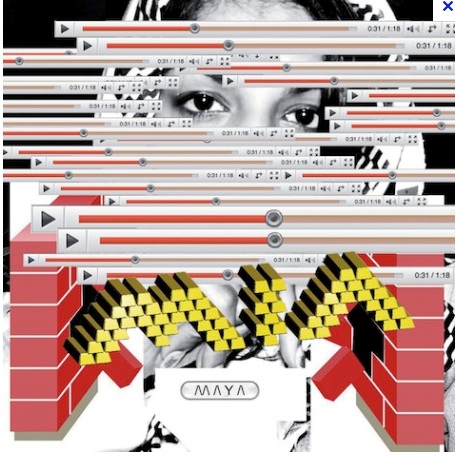 |
British artist M.I.A. frequently uses glitch for her album covers © M.I.A.Maya 2010 |

Therefore, glitch is a methodological
accident. A method is a conscious tool. This particular method brings accidents
from the flow of consciousness forward into the stream of reality. The more
technological reality becomes, the greater the probability that accidents
occur. The French cultural theorist Paul Virilio writes about “integral
accidents”, a concept supporting accidents as the sine qua non condition for technology. In other words, technology existing
without accidents calls for an impossibility. What is the nature of accidents
in art? Are accidents good or bad?
The search for accidents in art is at least
ninety years old. Name it digital
media, video art or glitch, the technique of allowing chance and randomness to
discover on one’s behalf a more exciting background to work on/with, goes back
to Man Ray’s photograms and to surrealism. We will emphasize here those
techniques closest to glitch.
 |
Man Ray, Rayograph, 1922 on The Metropolitan Museum of Art website here ©2011 Artists Rights Society (ARS), New York |
Max Ernst
and the frottage technique on the nineteen-twenties.
In 1925, Max Ernst, major contributor to the
theory and practice of Surrealism, developed a technique of placing wood and
other natural objects underneath the white paper or canvas, then rubbing the
pencil on top until negative shapes would appear in relief and create unexpected,
accidental textures. His Histoire
Naturelle, a portfolio of thirty-four collotypes after frottage, was
published in Paris in 1926.
 |
Max Ernst. La Roue de la lumière (The Wheel of Light) from Histoire Naturelle, introduction by Jean (Hans) Arp. 1926. (Reproduced frottages executed c. 1925). One from a portfolio of 34 collotypes after frottage
© INSIDE / OUT MoMA New York site
|
Jack Whitten,
the squeegee and the Xerox printers in the nineteen-seventies.
In 1973, Jack Whitten has used the squeegee
in a continuous motion across the layers of acrylic, producing a dizzying,
quasi-photographic blur. With a
razor-sharp carpenter’s plane he exposed areas of paint underneath, which made
the accidental surprises abound. Whitten learnt from his 1974 artist-residency
at Xerox Corporation that “he could go
far beyond the indexical trace, just as xerography is not limited to one-to-one
transfer but is capable of zooming out or enlarging, cropping or roving,
scrolling or dragging…Works such as the “Gamma Group” series of 1975 induced
moire patterns which connected the physical pull to the parallel electronic and
digital act, the line-by-line raster scan… Xerox was also communicable: created
images that could be sent. Whitten’s works figured out not only transcription
but transmission”, writes Michelle Kuo. (4)

Gerhard
Richter, the squeegee and the digital printing of the noughties.
Andrew W. Mellon Professor of Modern Art at
Harvard University, Benjamin H.D. Buchloh names Gerhard Richter’s most recent
intervention in the legacies of abstraction, the chance ornament. We are living
in the post-industrial era of abstraction and proliferation. (5)
“Chance as
ideology had entered painting in the 1950s in various ways… A newly liberated
subject, an author, and an art without any intention appeared on the horizon as
one of the great radical promises of the 1960s”, explains
Buchloh.
Corinne Belz’s new film, Gerhard Richter Painting (2011) trailer
uploaded by megatrailer on 14 March 2012 here
His article considers Richter’s artistic
development throughout the 60s, and reaches the twenty-tens when Richter is
again attracting crowds with his Panorama retrospectives at Tate Modern in London and Neue und Alte Nationalgalerie in Berlin.
His recent large-scale abstract paintings have been documented in Corinne
Belz’s new film, Gerhard Richter Painting
(2011), where Richter is using the same semi-mechanical device of the squeegee
as Jack Whitten previously. “The squeegee
process becomes transparent as an operation at the extreme opposite end from
what chance operations in the wake of Surrealist legacies of automatism had
still promised… Richter executes the painting with a massive device that rakes
paint across an apparently carefully planned and painted surface. Crisscrossing
the canvas horizontally and vertically leads to a radical diminishment of
tactile control and manual dexterity, suggesting that the erasure of painterly
detail is as essential to the work’s production as the inscription of
procedural traces. Thus as uncanny and deeply discomforting dialectic between
enunciation and erasure occurs”, and with this Buchloh unknowingly
describes perfectly the discomforting dialectic occurring between enunciation
and erasure in Saya Da Jung’s glitch works created in the same period, 2010,
2011.

The new series of digital prints, titled “Strips” (2011), are close to the digital media glitch through their usage of a highly developed technological application
of rigorously parallel, extremely refined and reduced chromatic striations. “These “Strips” emerged from a paradoxical process in which the artist subjected one
of his earlier large-scale abstractions (Abstract Painting, Abstraktes Bild,
1990 [CR:724-4]) to a series of programmatically anti-painterly operations in
order to produce a detailed and voluminous documentation of the digital
breakdown of abstraction for the pages of a book, “Patterns” (Walter Konig, Cologne, Heni Publishing,
London, 2011)”, explains the author. Many
of the strip-images in this book, such as Variation VI: 29/64 show a close
resemblance to the digitalized character-image obtained by Saya Da Jung in the
process of manipulating her doll-images. A strip of colors and a string of
signs share the same visuality. Buchloh
regards Richter’s abstractions as “apparently
subjected to something more than a deceivingly simple series of mathematical
partitions and multiplications” owing to
“a second operation of doubling and symmetrical reversal.” The subjective
possibilities and their random applications in Richter’s work do not signify to
Buchloh the artist’s abandonment to a digital futurism increasingly surrounding
and overwhelming us. Are Saya Da Jung’s works abandoning themselves to a
reality behind the screen?
Saya Da Jung
and glitch, chance vs randomness in the twenty-tens.
Saya Da Jung more recently works with glitch,
a technique widely spread among Chicago artists. She manipulates the file from
movie file with an image-editor then gets it back to movie format, which is a
method inviting technical errors. She chooses to do what you would not normally
do with a movie file, in her search for something accidental and interesting to
happen. The file does become something unexpected, unplanned. And this search
for accidental improvement is very important here. A strip of colors and a
string of signs are the result of digital manipulation of the film she is using.
We may name it “the error”. In digital media, glitch is a technique of chances,
of randomness, leading from a movie to an error. Is this chance, randomness, or
a determined, technically explicable process? Philosophy and sciences regard
chance and randomness as possibly not the same thing. Some theories consider
that there is chance without randomness. Randomness is seen as indifferent to
history, while chance is not. Other theories focus on the concept of randomness
without chance. Theories of chaotic dynamics build on sets of infinite binary
sequences which are measure-preserving, and where each coordinate can be
represented as an infinite binary sequence. Baker’s transformation of stretch
and fold dynamics in chaos theory is described as follows: “We take a system the state of which is characterized by a point in the
real unit square. We specify the evolution of this system over time as follows,
letting Q be the function governing the discrete evolution of the system over
time.” (6) Similarly, Saya Da Jung witnesses the discrete evolution over
time of the initial image in her work. The binary system behind the image
suffers a transformation. The glitch visual effect is actually not explained by
artistic transformations, but by the chaotic dynamics of the binary system
supporting the images on a digital platform. The chaotic movement of the glitch
becomes specific and explicable.
In
other words, Saya Da Jung’s Barbie dolls are more than just dolls. They are
entities caught between chance or randomness and determinism. Is there any
compatibility with her inner thoughts or consistency in the accidental flow of
the glitch? Let us consider what Saya Da Jung wished to represent with her
dolls, what kind of game of forces between determinism and chance, randomness
and free will, are her dolls actually expressing from behind the computer
screen.
(non-accidental)
subject. the dolls. the self. the other.
Now that we went through the history of
techniques similar to glitch in painting, manually manipulated printing and
digitally manipulated printing, we may focus on the actual subject of Saya Da
Jung’s recent works and ask the question why dolls? The doll could be the image
the artist chooses for herself. An avatar, a self that is an other. Another
image. A former image, of herself as a child. An image of another. An image of
an unborn child.

Dolls in art have a history themselves. I
would argue that unlike the rich historical background of the glitch technique,
the history of dolls in art explains almost nothing about Saya Da Jung’s dolls.
By contrast, we get a glimpse of what her dolls are not: sexual, useful, to be
possessed. The hottest trend in the Japanese contemporary art, artist Takashi
Murakami, makes erotic figures such as Miss Ko and other female doll-figurines
which sell well on the international market. His dolls, or kyarakutaa are exactly what buyers want them to be: sexual,
graphic, they represent the female figure subordinated to their wish
list. Mario Ambrosius is using big-sized dolls (75x112.5cm) for his A ma poupee japonaise, (2000-2001) (7).
Just like Hans Bellmer, he likes to leave visible the cruel lines separating
the doll’s parts. Manabe Mamie’s Momoko
dolls are dressed in sweatshirt clothes and exhibited (8). R.M.Fischer has used
big dolls, live-sized plastic mannequins as artworks in his “Bloomingdale’s Department Store Window
Installation”, 59th Street and Lexington Avenue, New York, 1979.
Each mannequin had its own source of light, and was exhibited in such a way
that they looked almost dragged into the light. Whether or not that light
expressed the flashlights making famous people famous, or the light shone on
beauty, an observation point is definitely fixed. The doll is observed from
only one angle. Saya Da Jung’s Barbie dolls, too are seen from a single
perspective, that of the camera photographing them before the images are
uploaded online.
 |
Takashi Murakami, Miss Ko, at the Versailles (2010) read more about challenging the Versailles in The Economist |
Laurie Simmons is perhaps a little closer to
Saya Da Jung than any other artists mentioned. Simmons used colorful figurines
in color-coordinated interiors, in works such as Red and White Kitchen, Yellow Living Room, Blue Bath etc., in
Chromogenic C-prints, 38x50.2 inches, 24x24.5 inches (1983). (9) Her style and
usage of dolls developed from a Hitchcock-like Black Series (1977), to mini-home housewife Interiors (1978), Water
Ballet with real performers (1980-1)
and Dolls Underwater (1981). Laurie
Simmons watched a lot of Hitchcock films, and was inspired by their ideal
color, spatial relations and lighting.
 |
Laurie Simmons, Red and White Kitchen, 1983 |
It was Max Ernst’s Au-dessus des nuages marches la minuit, 1920, a surrealist collage
of tiny Barbie-doll-like legs descending an insect-shaped top, that inspired
Laurie Simmons when she started creating images of tiny Barbie-doll-like legs
descending objects that had some kind of value to women, such as purses and
houses. She started creating “walking objects”. On top, an object, the lower
part, the legs of a doll. Walking Purse (1989),
Walking House (1989), Walking Gun (1991), Walking Cake (1989). In Bending
Globe (1991), she is showing the naked legs and buttocks of a doll from
behind. The rest of the body is inside the globe. Saya Da Jung’s I wish x I have: Hot Ass (2011) has got
the same perspective, while adding some hot color. Simmons later moved to the
“love doll”, placing a real-size doll in the same places she used before in her
art, in a bed, underwater etc. The most recent works of hers moved therefore from
the casual, house-wife to the erotic plastic immobile female figure, as art.
 |
Max Ernst’s Au-dessus des nuages marches la minuit 1920 |

In her text Visual Pleasure and Narrative Cinema, Laura Mulvey (10) quotes
Hitchcock while writing about stereotypes in traditional Hollywood films, scopophilia,
about women reduced to images, signifying the male desire, and men, bearers of
the male gaze which stands at the root of voyeurism, fetishism, narcissism and
identification with masculine ego ideals. She calls this obsessional male gaze
in the Hollywood trend of representation, erotic contemplation. The erotic
contemplation is a state of mind towards which Saya Da Jung’s dolls show no
interest. The erotic contemplation creates a space of no-choice, shut and
restrictive to someone else’s desires. Saya Da jung’s dolls choose to have a
choice, choose openness, and sublimation
of their own desires. Subjects like dolls and others can become an artist’s
signature, as it is in Hand Bellmer and Simmons’s case. Sometimes the dolls are
merely a starting point, and the artwork evolves into a different subject. In
Hans Bellmer’s case, desire, torture and death took over the doll. Saya Da
Jung’s forms, the digitalized images of dolls themselves are changing their
texture and material through editing.

For the moment, Saya Da Jung feels
comfortable identifying her self with let us say, immature images, from
anime-like computerized characters to Barbie dolls. She is not breaking them,
not twisting them. These miniature bodies are subject, not object. Saya Da Jung
is watching them, unobsessively, analyzing them, giving their static status a
dynamic input. A modern input. In After
Dark, a novel written by Haruki Murakami of an Orwellian 1984 inspiration,
a camera is following the rhythms of a character until the character itself is
left devoid of a certain reality. The camera is manipulated in the novel in
such a way that it leaves the observers unnoticed: "we are invisible, anonymous intruders...we
observe but we do not intervene". Yet, while being unnoticed, the movements of the camera change the
reality of the character to the point of loss of identity. Saya Da Jung moves
this “object” called doll into a subjective category. Observing the doll translates
as self-introspection for the artist.
Take this Barbie doll as a woman in modern
society. She might be texting, checking emails, reading e-zines and news
online. Purchasing books, shoes, airplane tickets, online. Might have people
around her texting, google-ing, on the bus, on the subway, walking, not
stopping, not noticing, not communicating. A woman invaded by useful and
useless information, needing it to find a job, to hold a job, to promote
herself or her employer. Social networking, Twitter, LinkedIn, Facebook,
MySpace, Blog, Website, update, upload, upset. This is the modern image of a
woman’s space. A modern woman’s space. Such a noisy space and cyberspace, that
the inner scream of the human being is left unheard, deafened. In this space
where no silences are allowed, where the environment is too big and too varied
and absorbs everything in it, Saya Da Jung manipulates the film of one’s
presence destroying the image until nothing is left on the film as if that life
had never existed. She manipulates the file from movie file to Photoshoppable or
image-editing file then gets it back to movie format, in her search for
something to happen at random. The newly obtained file reveals the unexpected, the
unplanned. As we already mentioned when analyzing ninety years of art history
as a background of the glitch technique, this search for accidental improvement
of the real support of the artwork is essential and while bringing about
negative shapes, it is a very positive tool in itself. But Saya Da Jung does
more than glitching: her manipulating of the file turns into a medical scan
pulling the fiber of the film till the scream of the human being is heard.
Using a doll, the modern woman is still screaming deep inside, that there is
something wrong in the world around her.
The choice for a doll can also be seen as a
denial of the flesh. “I am a lump of
flesh, a commercial asset”, is what Haruki Murakami’s character Eri,
observed with an Orwellian camera, thought of herself. When replacing one’s
flesh-ness with the cold plastic body of a doll, everything that is negative
about the way flesh is seen by others voyeuristically, fetishistically, is
opposed, and therefore untouchable. Saya Da Jung’s dolls are not awaking erotic
fantasies. On the contrary, if they could talk something, they might say Don’t touch me !
conclusion.
Glitch is, if we may, a modern mosaic of
chances, a digital error of memories, thoughts, emotions, repulsions, sympathy,
which synthesize two fundamental ideas, chaos and order, into one unified form,
as the artistic expression of creative destruction, which in mythology is
represented by the sacred figured of the Hindu god Shiva, destroyer and
creator. With glitch, Saya Da Jung destroys an image. The destruction of an
image creates another. In modern times, the expression “creative destruction”
has been popularized by its usage in relation with economic theory, capitalism,
socialism and democracy writings. Making art right from the heart of capitalism
and democracy, New York-based artist Saya Da Jung’s works get closer to the
original meaning of creative destruction. It is an entire world of creation she
is destroying and a new creative world she is trying to turn destruction into. With
the doll subject, a mother – child attachment becomes more visible in her
works. When asked how would she engage the public with her most recent
doll-works, it was the women with experiences of abortion that she thought of. Saya
Da Jung’s creative destruction in art derives from a dual creation-destruction
in life which opposes economic theories with humanistic studies of the human
being.
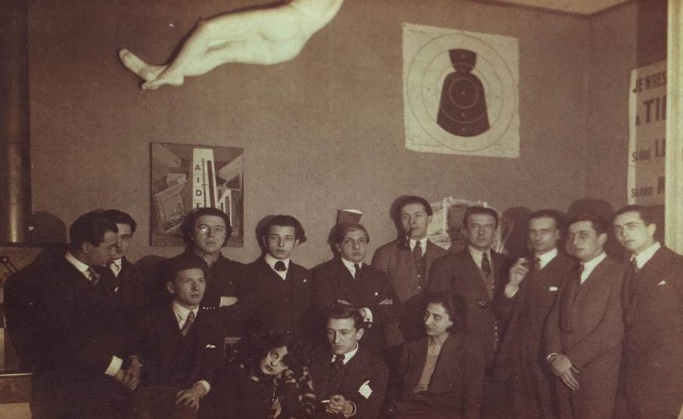
The surrealist body, prior to the digital era
was highly erotic. A photograph of Man Ray inside the Central Office of Surrealist Research (1924) is showing a
fragmented sculpture flying above the surrealist circle. There must be
something connecting broken dolls and fragmented sculptures representing in
museums across the world the classical ideal beauty: the idea that before
becoming a fragment, the whole was not just whole, it was perfect. The woman’s
body, before fragmented by the male erotic gaze, was perfect. The unborn
children, if not dumped by the male egotism, would have been perfect. Saya Da
Jung’s regard is not piercing through the surface of the image with harshness,
she gently looks at the body of the doll, does not buy or damage it. She leaves
surfaces intact, online, she edits and transforms their reality. With her
glitch technique, she makes sounds of pain and unborn heartbeats existent at
frequencies higher than you will ever be able to hear, hearable. The search for
the inside of herself is Saya Da Jung’s Ultrasound.
NOTES
(1) Saya Da Jung, Untitled (2010)
(2) Saya Da Jung, I
wish I have (2011)
(3) Dutch artist and theorist Rosa Menkman
explains more about glitch on her blog (accessed on 10 February 2012)
(4) Michelle
Kuo, Jack Whitten – A Portfolio – in
Art Forum International, February 2012, pp 184-195
(5) Benjamin
H.D. Buchloh, The Chance Ornament:
Aphorisms on Gerhard Richter’s Abstractions, in Art Forum International,
February 2012, pp 168-179. See also another recent article, Till Briegleb, Gerhard Richter: Der Unsichtbare, in
ART, Das Kunstmagazin, February 2012, pp 18-37.
(6) Chance versus Randomness,
in the online Stanford Encyclopedia of Philosophy (accessed 7 February 2012).
(7) At
the Mizuma Art Gallery, Tokyo, in Bijutsu
techo 10, 2003, p. 88.
(8) Manabe
Mamie’s works in Bijutsu techo 10,
2003, p. 96. See also her official website www.petworks.co.jp/doll/
(9) Some
of these works have been on display at Tomio Koyama Gallery in Tokyo, for
further reference visit tomiokoyamagallery.com.
(10)
Laura Mulvey, Visual Pleasure and Narrative Cinema, in Screen 16.3, Autumn 1975,
pp. 6-18.
Author: O. (Curatorial Assistant, The National Museum of Art Osaka, Japan)
Special thanks to: Ryoko (Researcher, The National Museum of Art Osaka, Japan)
written for the KCAF XII 12th Korea Contemporary ART Festival
17th April - 22th April 2012 Hangaram Art Museum in
Seoul Arts Center, Seocho-dong 700, Seocho-gu, Seoul, Korea
in March 2012
original publication available here
17th April - 22th April 2012 Hangaram Art Museum in
Seoul Arts Center, Seocho-dong 700, Seocho-gu, Seoul, Korea
in March 2012
original publication available here
Subscribe to:
Posts (Atom)